|
|
|
|
|
|
|
|
And now our feature story…the popular ‘crime and mystery’ genre
|
|
|
Traditionally daytime radio shows were aimed at stay-at-home Mums and children, hence they tended to be dramas and serials, with a tinge of crime or mystery.
|
|
This didn’t mean the stories didn’t have substance or real strength…Portia Faces Life was one of the most popular radio shows in history. The series ran from 1954 and contained over three and a half thousand episodes. By 1968, with the introduction of television and the pop music changes in radio, Portia was being phased out. However, not all radio stations wanted to see Portia exit, plus quite a few had sponsorship commitments they wished to honour. Rather than the ongoing
|
|
Once ‘the children had gone to bed’ more serious themes could be broadcast – and that is when harder hitting ‘Crime and Mystery’ entertainment challenged the listeners.
|
|
|
|
|
|
Leading into the 60s the world was becoming smaller and a more International flavour began to emerge. Radio competed with television for themes of war veterans who became private agents (of various sorts). For example, Abel Cain Investigates has a lot in common (thematically) with the TV show The Saint.
|
|
Society was also moving more rapidly between destinations thanks to airline technology advancements, and radio dramas such as From Paris With Love (Paris and New York) and The Big One Got Away (New York and southern France) demonstrated
|
|
how easily crime also moved between destinations.
|
|
|
|
|
|
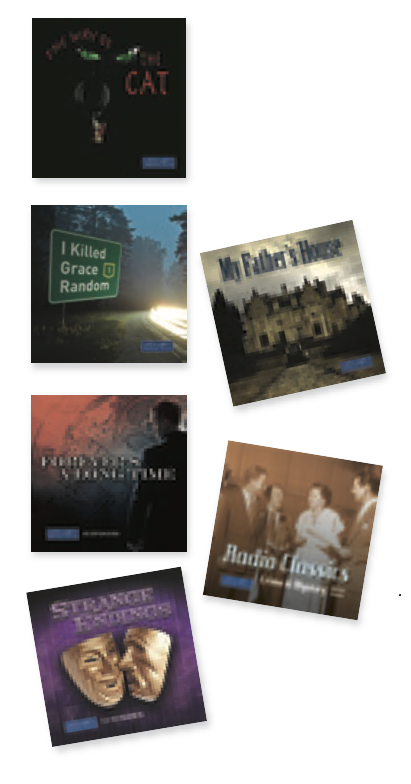
Radio changed quite a lot after the introduction of television, and more importantly, the introduction of Top 40 music. Shorter listening spans, greater efficiency and the quest for a fresh approach required a change to radio drama – Grace adapted by introducing shorter duration episodes (6 minutes, and sometimes 4 minutes each) and shorter series that only ran for 3 months on a Monday-Friday basis. This meant that radio stations could sign up sponsors for a shorter period, or swap between sponsors if so desired. Shows such The Way Of The Cat, Strip Jack Naked (aka Deadly Obsession), I Killed Grace Random, My Father’s House, and Forever Is A Long Time fitted this bill.
|
And finally, producers didn’t keep ‘masters’ of early radio productions, meaning very little remains today. However, some episodes of Grace Gibson’s recordings from the 1940s, can be found on our compilation volumes including, but not limited to, excerpts from Out Of The Night (1946), Dramas Of The Courts (1948), The Adventures Of The Falcon (1948) and Strange Endings (1949).
|
|
Radio shows that challenge listeners allow them to create their own ‘theatre of the mind’ and these often had the germ of the story rooted in real life and have always been
|
‘crowd pleasers’. Even today, radio stations that broadcast these series have loyal followings – people who schedule their appointments around when the morning serial is broadcast, people who set their alarm to listen to the ‘mid-dawn’ story, even ‘tradies’ who get irate if the wrong episode is broadcast during smoko!
|
|
Feel free to explore these dramas via the ‘Listen’ tab on our website: gracegibsonradio.com or call us for a sample CD. That way you can hear the first episode of all our audio productions.
|
|
|
|
|
|
|
|
|